
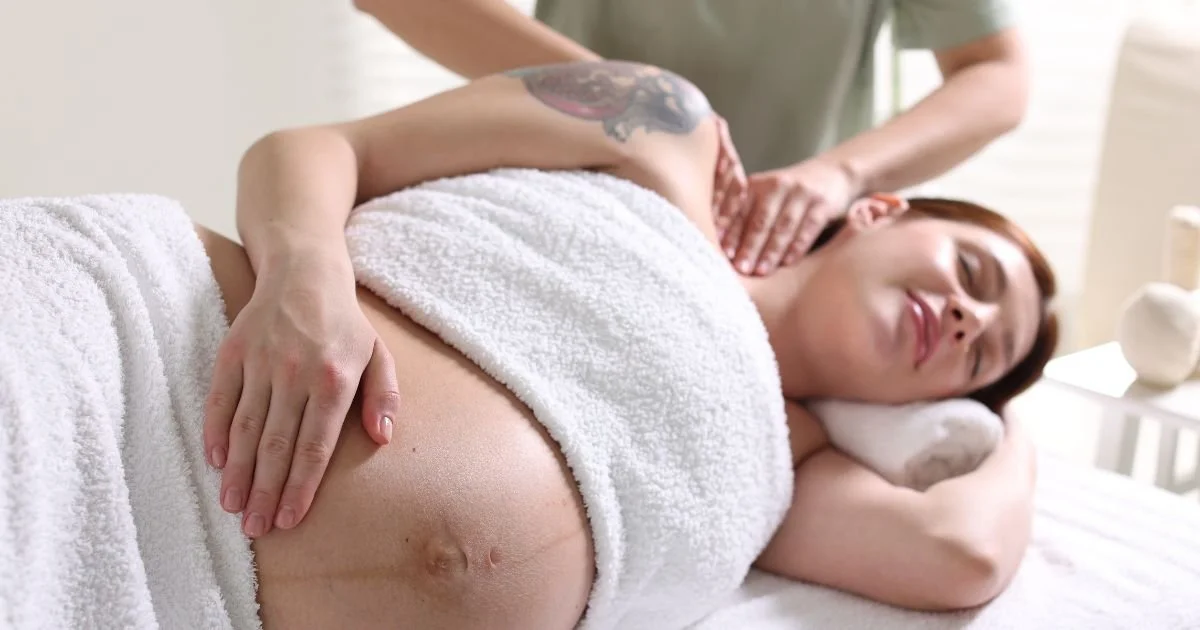
Growing a baby is one of the most physically demanding experiences the body can go through. During pregnancy, the body undergoes significant anatomical and hormonal changes—rib cage expansion, increased lumbar lordosis (lower back curve), widening of the pelvis, and increased joint laxity due to hormones such as relaxin. These changes, combined with a shifting center of gravity, often lead to discomfort in the lower back, hips, neck and shoulders.
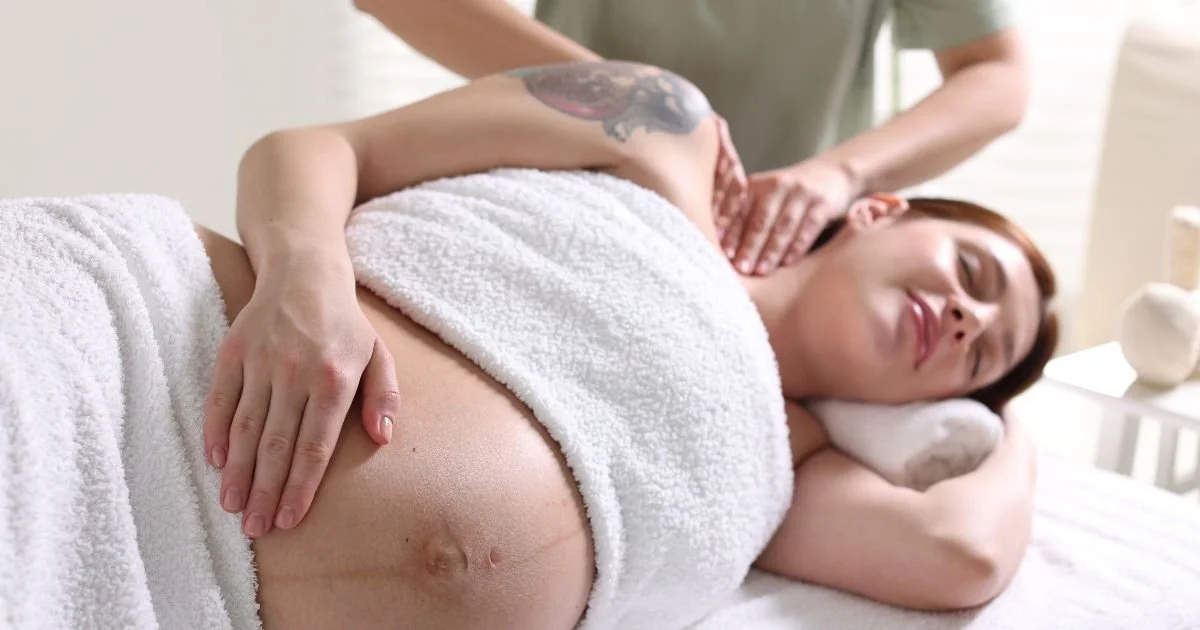
Massage therapy is a safe and effective way to help manage many of the common musculoskeletal complaints experienced during pregnancy and postpartum, when performed by a trained practitioner.
Lower back and pelvic support
As the pelvis gradually tilts forward to accommodate a growing baby, increased strain is placed on the lumbar spine and surrounding muscles. Research suggests massage can help reduce lower back pain by improving circulation, decreasing muscle tension, and supporting the body’s natural pain-modulating systems. Gentle work through the glutes and lateral hip muscles can also improve pelvic stability and reduce discomfort when walking or standing.
Hip and leg comfort
Tension through the hips and surrounding musculature can contribute to that familiar “waddle” many women experience later in pregnancy. Targeted massage can help reduce tightness, improve mobility, and support more efficient movement patterns.
Neck and shoulder relief
As posture adapts during pregnancy—and later with feeding, carrying, and settling a newborn—the upper body often takes on additional load. Massage therapy has been shown to reduce muscle tension and improve perceived stress, making it a valuable tool in preparing for (and recovering from) the physical demands of caring for a baby.
Managing swelling and circulation
Fluid retention (oedema), particularly in the legs and feet, is common in pregnancy. Lymphatic-style massage techniques can support fluid movement and circulation, helping to reduce discomfort associated with swelling.
Postnatal recovery and wellbeing
After birth, the body begins to recover from both pregnancy and delivery. Massage can support this transition by reducing muscle tension, improving circulation, and promoting relaxation. There is also emerging evidence that massage may help reduce stress hormones and support mood regulation—important factors during the postnatal period.
Massage is not just about relaxation—it can play a meaningful role in supporting physical comfort, movement, and overall wellbeing during both pregnancy and postpartum recovery. As always, treatment should be tailored to the individual, their stage of pregnancy or recovery, and what matters most to them.