
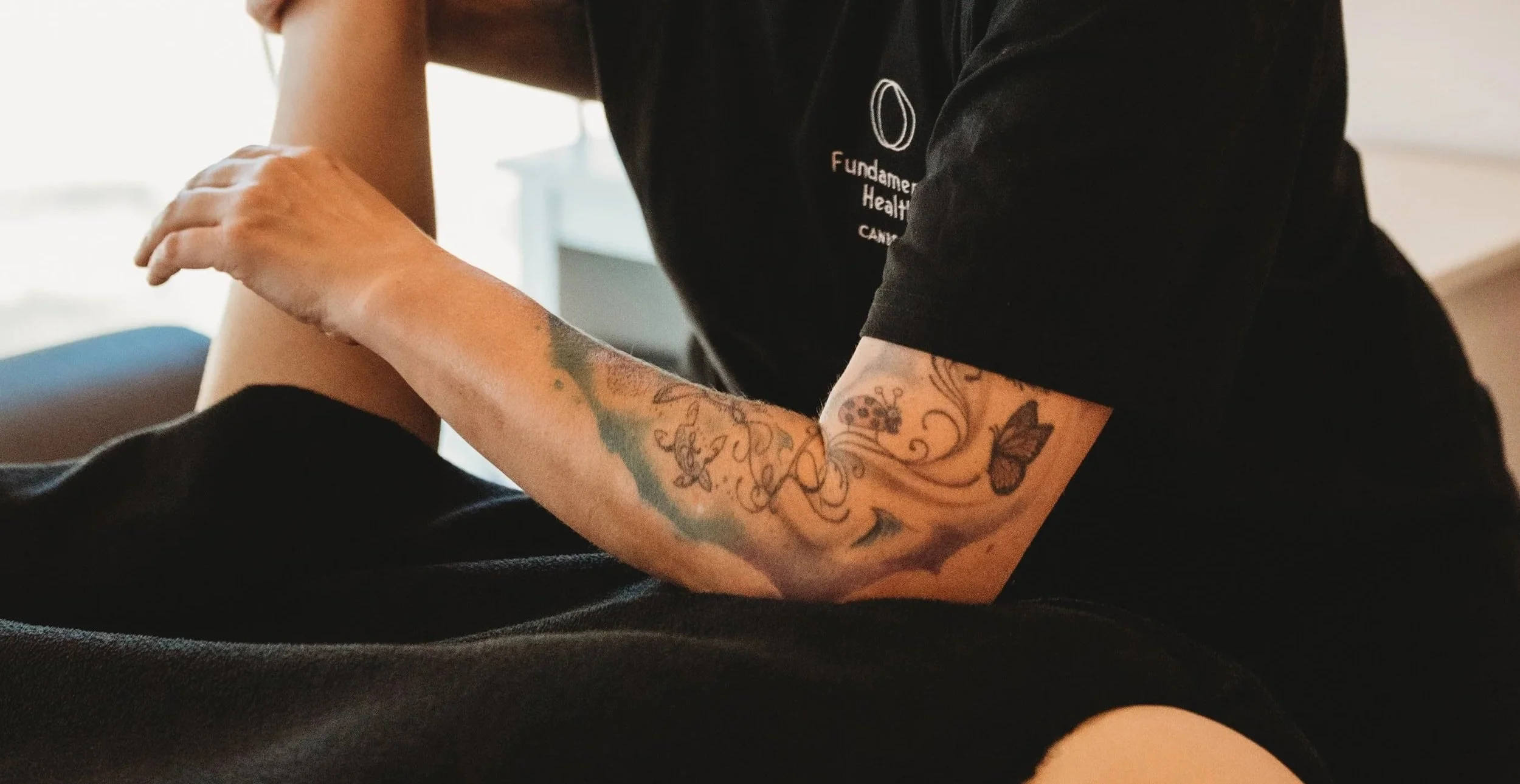
Amanda, massage therapist, talks about the impact handbags can have on our posture.
Shoes, handbags and jewellery are a gal’s best friend... but what damage are they doing to our bodies? High heels are the obvious guilty parties in shortening calves, adding pressure onto the balls of feet and compressing lower backs- all of which, over sustained and long periods of time, cause issues.
But we are here to talk about handbags. Yes, innocent as you think they may be, they play an important part of affecting our body biomechanics. It is the repetitive use of single-strapped handbags on the same shoulder that lead to postural problems.
Many clients have come to me in the past claiming that it can’t possibly be their handbags causing neck and spine pain as they are lightweight and carry only a small number of items.
But here’s the thing....
Your handbag could be EMPTY and still be affecting your posture.
How?
Let’s break it down by looking at the musculoskeletal framework:
Ideally the shoulders should be level with the neck running down the spine from the head to the lower back with a gentle ‘S’ bend (this acts as a shock absorber supplying efficient structural support).
The role of the shoulders is to allow movement and stability to the arms so therefore need to be in balance for optimal performance. Once one of the shoulders is ‘lopsided’, the effects ricochet through to the entire skeletal posture including the neck, opposite shoulder, spine and even to the hips.
Now, the shape of the shoulders is not a perpendicular 90 degree angle from the neck: they slope on a downward angle just as a coat hanger does. In fact, the upper trapezius muscles that cover the tops of the shoulders are called the ‘coat hanger muscles’ due to their shape.
But how does an empty handbag cause a shoulder to be lopsided?
In order for our downward sloping shoulder to balance a bag strap, it needs to tip slightly UPWARDS. Try it! If you look in the mirror whilst placing anything onto one of your shoulders, it will automatically engage the upper trapezius muscles and lift up so that it doesn’t fall off.
Imagine the effect of this on a repetitive basis over many years, let alone adding some serious weight such as a laptop or workout equipment into the bag! Add in a splash of carrying kids on one hip that we favour and hey presto you have a recipe for musculoskeletal concerns that could lead to chronic pain!
So, how can we correct or prevent this?
Posture correction is a journey mixed with strengthening certain muscle groups to activate and contract whilst others are massaged to lengthen and release. The most common area of the body for massage therapists to treat is the neck and shoulders, especially for office workers and even more so at stressful times of the year such as Christmas (due to longer, more intense working hours and tension build up).
Depending on whether pain is chronic or acute dictates how long this journey will take. With regular (ideally monthly) treatments, the deep neck muscles can be eased of their tension. This prevents them pulling the upper spine vertebrae (C1-7) out of alignment or causing tension headaches. Using techniques such as Trigger point therapy, cupping and deep tissue kneading, the upper trapezius (coat hanger) muscles can relax downwards whilst the pectoral (chest) muscles can sit backwards. This combination of released muscles allows our body to open and for our posture to relax into a more neutral position.
One way of preventing one shoulder to be higher than the other so that your posture can stay balanced and in alignment is to use bags that have TWO shoulder straps (one for each shoulder such as a backpack) or that can cross over your body.
Better still, try a clutch purse or a short single handed one that you can hold in either hand at any time.
So before you copy the next fashion runway or trendy style, just ask, how will this affect my body?
Book an appointment with Amanda to discuss how massage can help you.